Jeffrey Dahmer: the warnings they missed
He was already a convicted sex offender on probation. A prosecutor asked for prison, probation waived its home visits, and police ignored the neighbors at 25th and State. Then a survivor ran into the street, and a jury rejected the insanity defense on all 15 counts. Follow the string from Ohio in 1978 to Portage in 1994.
Jeffrey Dahmer: The Insanity Defense That Failed, and the Warnings the System Missed
True Crime Files, No. 3 — by The Law Girl
Every few years a new series or documentary sends Jeffrey Dahmer back up the streaming charts. Most of them linger on the horror. I’m not going to.
I’m The Law Girl, and this file is about what the legal system did, and didn’t do, with this case. Dahmer was already a convicted sex offender on probation when he killed most of his victims. Police officers stood inside his apartment two months before his arrest and left a 14-year-old boy there. When he finally faced a jury, the only question was whether he was legally insane. The jury said no. That is the part of the story most people get wrong.
My usual promise applies, and it matters more than usual here. This is about the case and the law, not the violence. I’ve left out the details that get repeated for shock value. The 17 boys and young men he killed are named with respect, as they appear in the public record.
How we label claims
- Fact Documented in court records or official records, or confirmed by authorities.
- Allegation A specific claim by a named person or party that was never proven in court.
- Speculation A theory, rumor, or unverified link. It’s included so you know it exists, together with what authorities said about it.
Badges mark the claims where the status isn’t obvious. Everything unlabeled comes from the court records, official records, and reporting listed under Sources.
The Case File
| Defendant | Jeffrey Lionel Dahmer, born May 21, 1960, in Milwaukee, Wisconsin |
|---|---|
| Known crimes | Murders of 17 boys and young men, 1978–1991: one in Bath Township, Ohio, and 16 in Milwaukee and West Allis, Wisconsin |
| Prior conviction | Milwaukee County, 1989: second-degree sexual assault and enticing a child for immoral purposes (a 13-year-old boy). Sentenced to one year in the House of Correction with work release, plus five years’ probation |
| Charged | Wisconsin, 1991: 15 counts of first-degree murder. Ohio, 1991: aggravated murder of Steven Hicks (Summit County indictment) |
| Never charged | The 1987 death of Steven Tuomi. Dahmer confessed, but there was no physical evidence |
| Plea | Jan. 13, 1992: guilty but insane to all 15 Wisconsin counts |
| Verdict | Feb. 15, 1992: a Milwaukee jury found him legally sane on every count, by a 10–2 vote |
| Sentences | Feb. 17, 1992: 15 consecutive life terms (Wisconsin). May 1, 1992: a 16th life term (Ohio) |
| Died | Nov. 28, 1994, killed by another prisoner at Columbia Correctional Institution, Portage, Wisconsin, age 34 |
| Military service | U.S. Army, 1979–1981; honorable discharge (see Service Record below) |
Timeline
- June 18, 1978: Weeks after finishing high school, Dahmer kills 18-year-old Steven Hicks at his family’s home in Bath Township, Ohio. The case goes unsolved for 13 years.
- January 1979 to March 1981: U.S. Army service, including about 20 months as a medic in Baumholder, West Germany.
- 1982–1988: Dahmer lives with his grandmother in West Allis, a Milwaukee suburb.
- September 1987: Steven Tuomi dies in a Milwaukee hotel room. Dahmer is never charged.
- September 1988: Dahmer is arrested for drugging and sexually assaulting a 13-year-old boy.
- May 1989: He is sentenced to one year of work release and five years’ probation. Prosecutors had asked for prison.
- March 1990: He is released early and begins probation. In May he moves into the Oxford Apartments, 924 N. 25th St., in Milwaukee.
- May 27, 1991: Milwaukee police officers return 14-year-old Konerak Sinthasomphone to Dahmer’s apartment despite neighbors’ protests. He is killed that night.
- July 22, 1991: Tracy Edwards escapes the apartment with a handcuff on one wrist and flags down police. Dahmer is arrested.
- August 1991: Prosecutors charge 15 counts of first-degree murder.
- Jan. 13, 1992: Dahmer pleads guilty but insane.
- Feb. 15, 1992: The jury finds him sane.
- Feb. 17, 1992: He is sentenced to 15 consecutive life terms.
- May 1, 1992: He pleads guilty in Akron, Ohio, to the Hicks murder and gets a 16th life term.
- Nov. 28, 1994: He is beaten to death by another prisoner at Columbia Correctional Institution.
Service Record
Dahmer’s Army service gets mentioned in almost every retelling, usually without dates or context. Here is what the record supports.
| Branch | U.S. Army |
|---|---|
| Enlisted | January 1979, at his father’s urging, after dropping out of Ohio State University. The New York Times reported he first enlisted to serve as a military policeman and was moved to medical training |
| Training | Medical specialist course, Fort Sam Houston, Texas |
| Posting | July 1979 to March 1981: combat medic with the 68th Armored Regiment (reported as the 2nd Battalion, 8th Infantry Division) in Baumholder, West Germany |
| Evaluations | His first year was rated “average or slightly above average,” according to records reported by the Akron Beacon Journal |
| Separation | March 1981, before his enlistment ended, because his drinking had impaired his performance. He was separated under Chapter 9 of Army Regulation 635-200, the alcohol and drug abuse provision |
| Discharge | Honorable, as reported by Military.com and Military Times |
Three claims about these years have never been proven. Here they are, with what authorities said.
Speculation The German cases. Days after his July 1991 arrest, police in Germany reopened unsolved killings and disappearances from his time at Baumholder, as the Associated Press and UPI reported. German authorities said they were re-examining five unsolved murders in the region, including the November 1980 killing of a 22-year-old hitchhiker, Erika Handschuh. Some of the victims were women, which didn’t fit his known pattern. “There has been no evidence to link these to the Dahmer case,” a German police spokeswoman said at the time. Through his lawyer, Dahmer denied killing anyone in any other state or country. No link was ever publicly established, and he was never charged with anything in Germany.26,29,30
Allegation Billy Joe Capshaw. In 2019, his former Army roommate, Billy Joe Capshaw, told the New York Times that Dahmer had assaulted him in Baumholder. That allegation was never tested in court. Capshaw is a veteran, and his account deserves to be heard with respect.27
Speculation Adam Walsh. After the Army, Dahmer lived in South Florida in 1981. That July, 6-year-old Adam Walsh was abducted from a shopping mall in Hollywood, Florida, and murdered. After Dahmer’s 1991 arrest, Hollywood police said they were looking into a possible connection, and years later some witnesses said the man they saw at the mall was Dahmer. He denied it. In December 2008, Hollywood police closed the case and named another man, Ottis Toole, who had confessed and recanted several times and died in prison in 1996. The chief acknowledged there was no new evidence. Dahmer was never charged, and no court ever heard the theory.30,31,32
Fact What the record doesn’t support is the idea that the Army made Dahmer a killer. His first killing came in June 1978, months before he enlisted.25,30 Millions of Americans served in those same years and came home to ordinary lives. His service is a fact in his biography, not an explanation.
The Warnings: 1988 to 1991
The Dahmer myth says nobody could have seen him coming. The record shows three moments when the system had him in hand.
The 1989 sentence. In September 1988, Dahmer drugged and sexually assaulted a 13-year-old boy he had lured to his apartment. The boy got away and went to police. Dahmer pleaded guilty in January 1989 to second-degree sexual assault and enticing a child for immoral purposes. At sentencing that May, Assistant District Attorney Gale Shelton asked Judge William Gardner for a prison term of at least five years and argued that Dahmer’s prospects for treatment in the community were bleak. Defense attorney Gerald Boyle argued for treatment instead. Judge Gardner chose one year in the Milwaukee County House of Correction with work release, so Dahmer could keep his job at the Ambrosia Chocolate factory, plus five years’ probation. He was released about two months early, in March 1990.
We now know Dahmer killed Anthony Sears in March 1989, while he was awaiting that sentence. Nobody in the courtroom knew it.
Probation. Dahmer’s probation agent took over his file in March 1990, as one of 121 active cases in Milwaukee’s sex offender unit. Wisconsin rules for maximum supervision required a home visit every 30 days unless a supervisor waived it in writing. Her supervisor signed waivers, and no one from probation ever went to Dahmer’s apartment. By every account he was a model client. He kept appointments, passed alcohol tests, and saw counselors. Most of his killings happened in that apartment during that probation.
May 27, 1991. That night, 14-year-old Konerak Sinthasomphone was found dazed, injured, and naked on the street at 25th and State in Milwaukee. Police officers John Balcerzak and Joseph Gabrish responded. Dahmer arrived and told them the boy was his adult boyfriend and was drunk. Several Black neighbors at the scene protested that the boy was a child and needed help. The officers walked him back to Dahmer’s apartment and left. A federal judge later described the scene: the body of another victim lay unnoticed in an adjoining room. Konerak was killed that night. He was the older brother of the boy Dahmer had assaulted in 1988.
Caught by a Survivor
On the night of July 22, 1991, Tracy Edwards ran out of the Oxford Apartments with a handcuff hanging from one wrist and flagged down two Milwaukee officers, Robert Rauth and Rolf Mueller. They went back to Apartment 213 with him. While looking for the handcuff key, one officer found photographs that made it obvious what had happened there. Dahmer was arrested on the spot. A search of the apartment found the remains of 11 victims.
No profiler, tip line, or forensic breakthrough solved this case. A man who survived ran into the street and asked for help, and two officers listened.
The Charges: Why 15 Counts
Dahmer confessed to 17 killings. He was charged with 15 in Milwaukee, and the gap is a lesson in prosecutorial discipline.
- Steven Hicks (1978) was killed in Ohio. Wisconsin had no jurisdiction, so the case belonged to Summit County, Ohio, where a grand jury indicted Dahmer in September 1991 after investigators identified Hicks’s remains.
- Steven Tuomi (1987) was never charged anywhere. Dahmer said he woke up in a hotel room to find Tuomi dead and had no memory of killing him, and no physical evidence survived. Milwaukee County District Attorney E. Michael McCann charged only what he could prove beyond a reasonable doubt.
A confession alone is not enough to convict in American courts. Prosecutors need independent evidence that the crime happened. A careful prosecutor doesn’t charge a count just because the defendant says he did it.
The Plea: Guilty but Insane
Dahmer first entered two pleas: not guilty, and not guilty by reason of mental disease or defect. On Jan. 13, 1992, he changed his plea to guilty on all 15 counts while keeping the insanity plea. Judge Laurence C. Gram Jr. of Milwaukee County Circuit Court accepted the change.
That move skipped the guilt phase entirely. Wisconsin tries an insanity plea in two parts, guilt first and mental responsibility second. By admitting guilt, Dahmer left the jury one question: was he legally responsible for what he did?
The trial began Jan. 30, 1992, behind an eight-foot barrier of bulletproof glass, at the Milwaukee County Courthouse. For two weeks, psychiatrists and psychologists for both sides debated whether he had a mental disease and, if so, whether it took away his capacity to appreciate that his conduct was wrong or to control it. The defense argued he was driven by compulsions he couldn’t resist. The prosecution argued he planned carefully, hid evidence, and knew exactly what he was doing.

Image: Michael Barera, 2023, via Wikimedia Commons. CC BY-SA 4.0.
On Feb. 15, 1992, after about five hours of deliberation, the jury found that Dahmer did not lack substantial capacity to appreciate the wrongfulness of his conduct or to conform it to the law. The vote was 10–2 on every count. In Wisconsin, only 10 of 12 jurors need to agree on the insanity question.
Sentencing: 15 Life Terms, Then a 16th
On Feb. 17, 1992, victims’ relatives spoke in court before the sentence. Then Judge Gram imposed the maximum: 15 consecutive life terms. Prosecutors calculated that he would not have been eligible for parole for 936 years. Wisconsin has had no death penalty since 1853, so life was the ceiling.
On May 1, 1992, in Summit County Common Pleas Court in Akron, Dahmer pleaded guilty to aggravated murder in the death of Steven Hicks. He received another life sentence, to run after the Wisconsin terms. Ohio had no constitutional death penalty in 1978, so life was the maximum there too. Hicks’s mother, Martha Hicks, addressed the court.
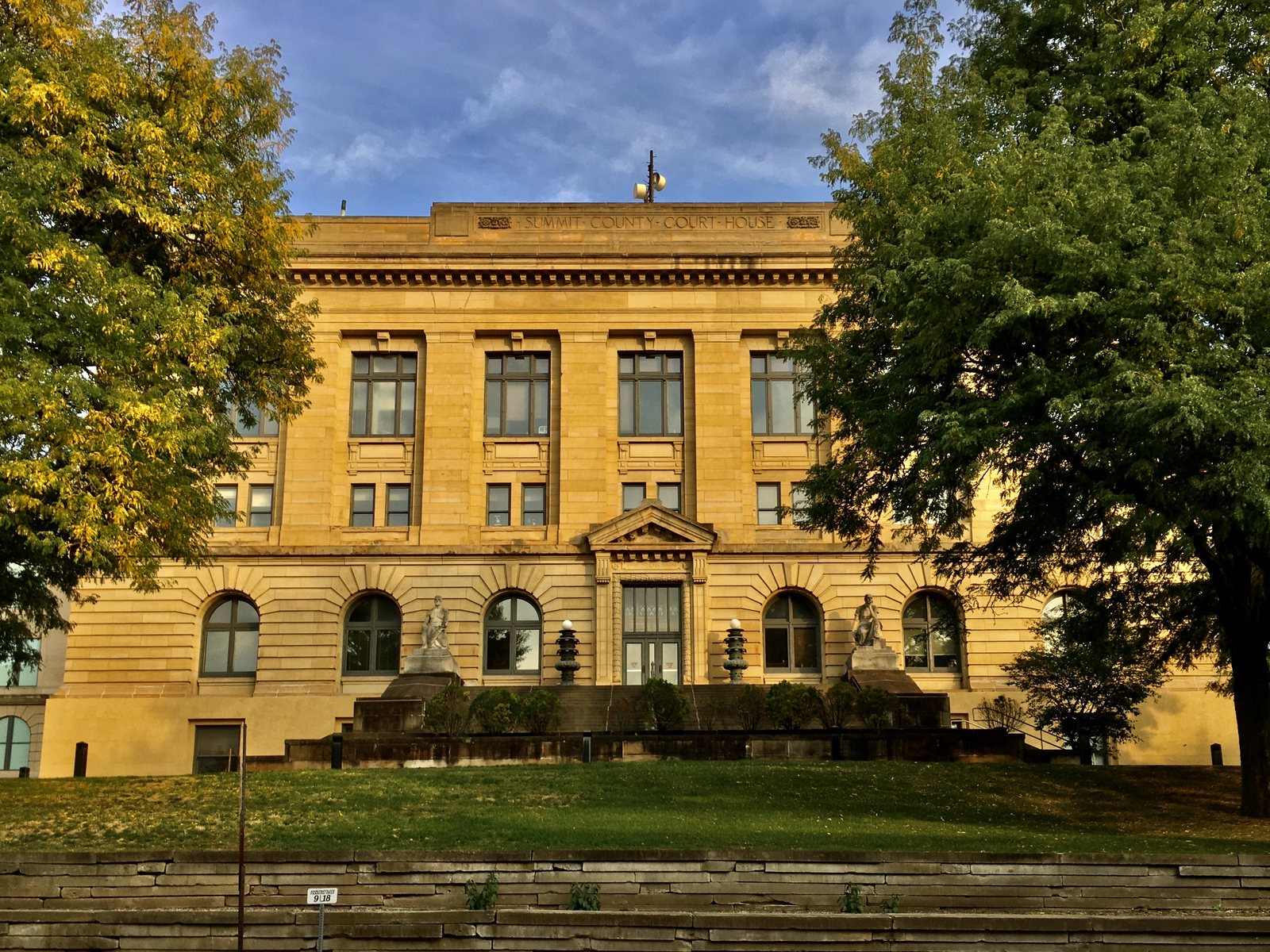
Image: Andre Carrotflower, 2020, via Wikimedia Commons. CC BY-SA 4.0.
Death in Prison
Dahmer served his sentences at Columbia Correctional Institution, a maximum-security prison in Portage, Wisconsin. On Nov. 28, 1994, while on a cleaning detail in the prison gym, he was beaten with a metal bar by another prisoner, Christopher Scarver, who was already serving a life sentence for murder. Another prisoner on the detail, Jesse Anderson, was also attacked and died two days later. Dahmer was 34.
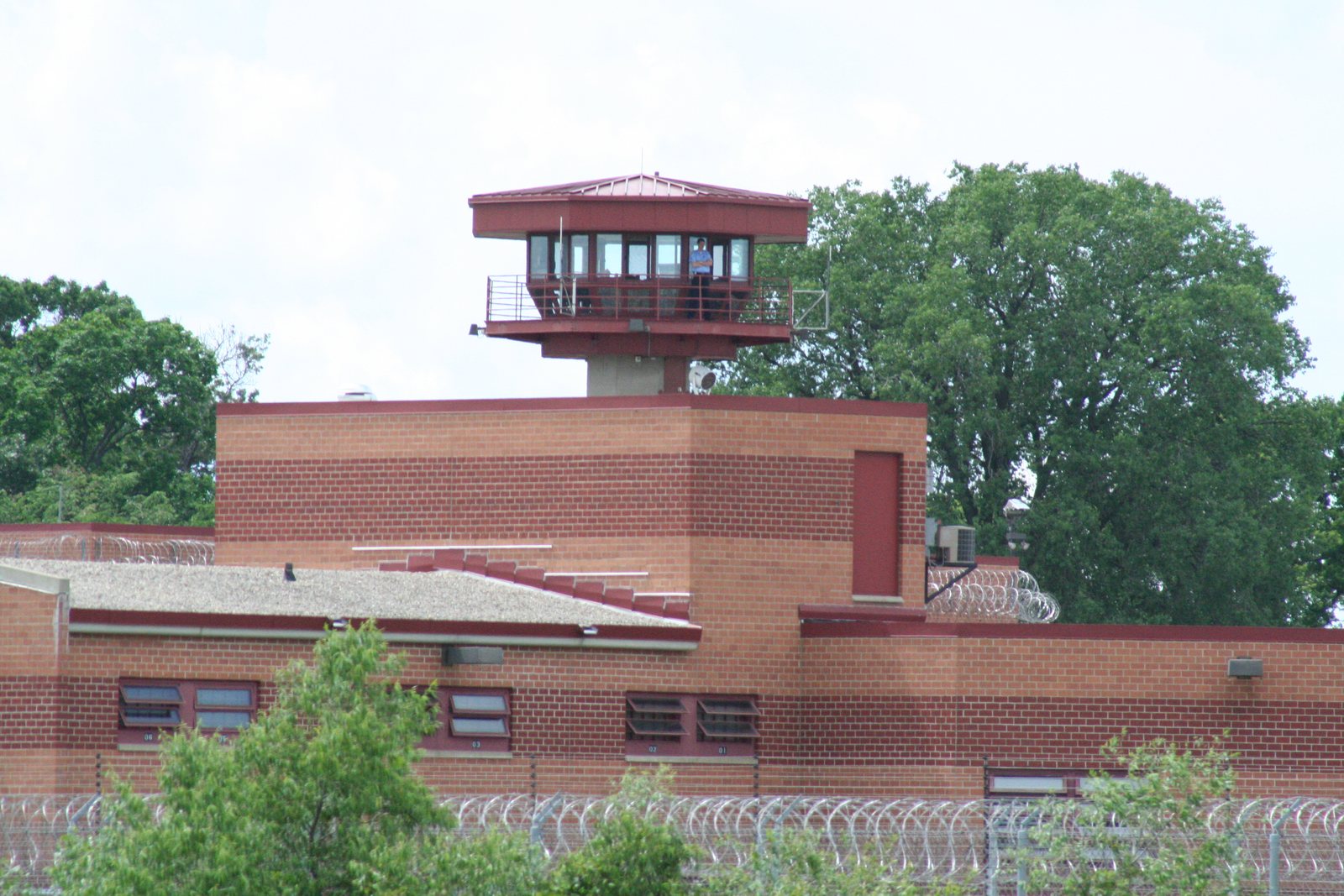
Image: Dual Freq, 2008, via Wikimedia Commons. CC BY-SA 3.0.
The Cases That Came After
The criminal case ended in 1992. The legal fallout lasted years longer.
The officers. In September 1991, Police Chief Philip Arreola fired Balcerzak and Gabrish. In April 1994, a reserve judge ordered both reinstated with back pay, finding that the officers made mistakes but that firing was too harsh in hindsight. Mayor John Norquist also appointed a citizens’ commission that urged sweeping changes in Milwaukee policing.
The Sinthasomphone family’s lawsuit. Konerak’s family sued the city and the officers in federal court, claiming that the boy was denied equal protection because of his race, sex, and perceived sexual orientation. In 1995, Chief U.S. District Judge Terence T. Evans refused to dismiss the case and sent it toward a jury trial. Days before trial, Milwaukee’s Common Council approved an $850,000 settlement.
The probation lawsuit. Jeremiah Weinberger’s father sued the State of Wisconsin and Dahmer’s probation agent, arguing that skipping the required home visits let Dahmer kill. The federal courts disagreed. In 1997, the Seventh Circuit held that the waivers were properly approved under state rules, that none of the mental health professionals treating Dahmer flagged him as dangerous, and that the agent’s conduct wasn’t reckless.
The Law Girl’s Take
1. How the insanity defense actually works
Wisconsin uses a version of the American Law Institute test. A person isn’t responsible for criminal conduct if, because of mental disease or defect, he “lacked substantial capacity either to appreciate the wrongfulness of his or her conduct or conform his or her conduct to the requirements of law.” Two details made Dahmer’s defense an uphill climb:
- The burden was on him. Insanity is an affirmative defense in Wisconsin. The defendant must prove it “to a reasonable certainty by the greater weight of the credible evidence.” The state didn’t have to prove he was sane. He had to prove he wasn’t.
- Repeated crime isn’t a disease. The statute says “mental disease or defect” does not include an abnormality shown only by repeated criminal or antisocial conduct. The horror of the crimes can’t be the proof of insanity.
In his opening statement, McCann told jurors that Dahmer had said he knew his acts were wrong. That left only the claim that he couldn’t control himself, and the evidence of planning and concealment cut hard against it. Boyle said after the verdict, “I knew I had an uphill struggle.”
2. “Guilty but insane” is not a loophole
People still say Dahmer “tried to get off on insanity.” Even a win would not have freed him. Under Wisconsin law, a person found not guilty by reason of mental disease is committed to the state health department instead of prison. For a crime punishable by life, that commitment can last for life. Before the trial, Boyle and McCann both said the chance he’d ever be released was slim. The real stakes were a state hospital or a prison cell, and Wisconsin juries are told exactly that.
Nationally, insanity pleas are rare and rarely succeed. Dahmer’s case is a famous loss, not a famous escape.
3. Probation, home visits, and the limits of a lawsuit
The probation lawsuit failed on a principle that frustrates many families. In DeShaney v. Winnebago County (1989), a Wisconsin case, the U.S. Supreme Court held that the Constitution’s Due Process Clause generally doesn’t require the state to protect people from private violence. To win a federal civil rights claim, the Weinberger plaintiffs needed to show conduct “criminally reckless,” not just negligent. A rule-compliant waiver signed by a supervisor, for a client who was cooperative and cleared by his doctors, wasn’t close. The state-law claims failed too, on a missed notice-of-claim deadline and official immunity.
I prosecuted cases. I know what a 121-case caseload means. The court was right that hindsight isn’t recklessness. But the lesson for policymakers is plain: a supervision system that waives its own safeguards because of workload is a system choosing not to look.
4. May 27, 1991: discretion and equal protection
The Sinthasomphone case never reached a verdict, so no court decided whether the officers discriminated. What the judge did decide is that the claim deserved a jury. Allegation The family alleged that officers dismissed the Black neighbors who tried to help, and accepted a white man’s story about a Laotian boy.5 Under City of Canton v. Harris (1989), a city can be liable when its policies or customs reflect “deliberate indifference” to people’s rights. The $850,000 settlement ended the case without an answer.
Here’s what the record does show. The witnesses at 25th and State were right. The officers were trusted with discretion, and they used it to believe the wrong person.
5. No death penalty, and why “936 years” isn’t silly
Consecutive life terms can sound like theater. They aren’t. Stacking them means a later appeal or parole change on one count doesn’t open the door. Each count also stands for a separate person. Fifteen sentences say 15 lives were taken, and the families in that courtroom heard it.
6. The state’s duty inside prison
Once the state locks someone up, it does owe a duty of care. Prison officials can be liable under the Eighth Amendment for deliberate indifference to a known, substantial risk of harm (Farmer v. Brennan, 1994). That rule protects every prisoner, even the most hated one. Dahmer’s sentence was life in prison, not death at another prisoner’s hands. A justice system that means what it says has to protect the people in its custody, all of them.
Myth vs. Record
“Despite the vigorous protestations of several African-Americans on the scene, the officers and Dahmer led Sinthasomphone back to Dahmer’s apartment.”
Chief U.S. District Judge Terence T. Evans, Estate of Sinthasomphone v. City of Milwaukee (E.D. Wis. 1995)
- Myth: He was found insane. Record: Fact The jury found him sane on all 15 counts, 10–2 each time.12,13
- Myth: Winning an insanity verdict would have set him free. Record: Fact It would have meant commitment to a state institution, potentially for life.2
- Myth: No one could have seen him coming. Record: Fact A 1989 sexual assault conviction, a prosecutor who asked for prison, probation without home visits, and a 1991 police encounter where neighbors begged officers to help.3,5
- Myth: He was a cunning mastermind. Record: Fact He was caught when a survivor escaped and flagged down a patrol car.18
- Myth: The Army made him a killer. Record: Fact His first killing came months before he enlisted.25,30
- Myth: He was executed. Record: Fact Wisconsin has had no death penalty since 1853. He was killed by another prisoner.22,28
- Myth: He also killed in Germany, or killed Adam Walsh. Record: Fact Neither link was ever established. He was never charged outside Wisconsin and Ohio, and in 2008 Florida police named another man in the Walsh case. Both theories are laid out, and labeled, in the Service Record section.29,30,31
The neighbors who tried to save Konerak Sinthasomphone saw clearly what trained officers missed. Remember them, not the monster.
Remembering the Victims
These are the 17 boys and young men Dahmer admitted killing, as named in court records and contemporary reporting. Many were young Black, Latino, Asian, and gay men whose disappearances drew too little attention while they were missing. Each was a son, brother, or friend.
- Ohio, 1978: Steven Hicks
- 1987: Steven Tuomi
- 1988: James Doxtator, Richard Guerrero
- 1989: Anthony Sears
- 1990: Raymond Smith (also known as Ricky Beeks), Edward Smith, Ernest Miller, David Thomas
- 1991: Curtis Straughter, Errol Lindsey, Anthony Hughes, Konerak Sinthasomphone, Matt Turner, Jeremiah Weinberger, Oliver Lacy, Joseph Bradehoft
Tracy Edwards, who escaped on July 22, 1991, survived and helped end it.
In January 1992, Shirley Hughes, Anthony Hughes’s mother, told reporters about the insanity plea: “He’s not insane.” The jury agreed with her.
— The Law Girl
Sources
- Wis. Stat. § 971.15 (mental responsibility; burden of proof). https://docs.legis.wisconsin.gov/statutes/statutes/971/15
- Wis. Stat. § 971.165 (bifurcated trial; five-sixths verdict on mental responsibility) and § 971.17 (commitment). https://docs.legis.wisconsin.gov/statutes/statutes/971/165
- Weinberger v. State of Wisconsin, 105 F.3d 1182 (7th Cir. 1997) (probation supervision, home-visit waivers, 121-case caseload). https://law.resource.org/pub/us/case/reporter/F3/105/105.F3d.1182.95-3398.html
- Weinberger v. Wisconsin, 906 F. Supp. 485 (W.D. Wis. 1995). https://law.justia.com/cases/federal/district-courts/FSupp/906/485/2126565/
- Estate of Sinthasomphone v. City of Milwaukee, 878 F. Supp. 147 (E.D. Wis. 1995). https://law.justia.com/cases/federal/district-courts/FSupp/878/147/1440090/
- DeShaney v. Winnebago County Department of Social Services, 489 U.S. 189 (1989). https://supreme.justia.com/cases/federal/us/489/189/
- City of Canton v. Harris, 489 U.S. 378 (1989). https://supreme.justia.com/cases/federal/us/489/378/
- Farmer v. Brennan, 511 U.S. 825 (1994). https://supreme.justia.com/cases/federal/us/511/825/
- Associated Press via Los Angeles Times, “Dahmer Pleads Guilty but Insane in Serial Slayings,” Jan. 14, 1992. https://www.latimes.com/archives/la-xpm-1992-01-14-mn-261-story.html
- The New York Times (AP), “Dahmer Changes Plea To Guilty but Insane,” Jan. 14, 1992. https://www.nytimes.com/1992/01/14/us/dahmer-changes-plea-to-guilty-but-insane.html
- The Washington Post, “Ghoulish Details Dominate as Dahmer Trial Begins,” Jan. 31, 1992. https://www.washingtonpost.com/archive/politics/1992/01/31/ghoulish-details-dominate-as-dahmer-trial-begins/1190c517-19d4-45ed-92f9-22b2f6c32d48/
- UPI, “Jury finds Dahmer sane,” Feb. 15, 1992. https://www.upi.com/Archives/1992/02/15/Jury-finds-Dahmer-sane/6349698130000/
- The New York Times, “Milwaukee Jury Says Dahmer Was Sane,” Feb. 16, 1992. https://www.nytimes.com/1992/02/16/us/milwaukee-jury-says-dahmer-was-sane.html
- The New York Times (AP), “15 Life Terms and No Parole for Dahmer,” Feb. 18, 1992. https://www.nytimes.com/1992/02/18/us/15-life-terms-and-no-parole-for-dahmer.html
- UPI, “Dahmer indicted in boyhood home,” Sept. 24, 1991. https://www.upi.com/Archives/1991/09/24/Dahmer-indicted-in-boyhood-home/8069685684800/
- UPI, “Dahmer sentenced to life for Hicks murder,” May 1, 1992. https://www.upi.com/Archives/1992/05/01/Dahmer-sentenced-to-life-for-Hicks-murder/7300704692800/
- The Washington Post, “Dahmer Gets Life Term in 1978 Murder in Ohio,” May 2, 1992. https://www.washingtonpost.com/archive/national/1992/05/02/dahmer-gets-life-term-in-1978-murder-in-ohio/851e8c28-69eb-4b14-8f25-250d47d32791/
- The New York Times, “Parts of Many Bodies Found In a Milwaukee Apartment,” July 24, 1991. https://www.nytimes.com/1991/07/24/us/parts-of-many-bodies-found-in-a-milwaukee-apartment.html
- UPI, “Two cops fired for returning naked boy to Dahmer,” Sept. 6, 1991. https://www.upi.com/Archives/1991/09/06/Two-cops-fired-for-returning-naked-boy-to-Dahmer/7782684129600/
- The New York Times, “Victory for Two in Dahmer Case,” April 28, 1994. https://www.nytimes.com/1994/04/28/us/victory-for-two-in-dahmer-case.html
- The Washington Post, “Milwaukee to Pay $850,000 to Family of Dahmer Victim,” April 26, 1995. https://www.washingtonpost.com/archive/national/1995/04/26/milwaukee-to-pay-850000-to-family-of-dahmer-victim/a08988a1-9957-4c4e-85c4-0af729145603/
- The New York Times, “Jeffrey Dahmer, Multiple Killer, Is Bludgeoned to Death in Prison,” Nov. 29, 1994. https://www.nytimes.com/1994/11/29/us/jeffrey-dahmer-multiple-killer-is-bludgeoned-to-death-in-prison.html
- The New York Times, “Inmate Bludgeoned With Jeffrey Dahmer on Work Detail Dies,” Dec. 1, 1994. https://www.nytimes.com/1994/12/01/us/inmate-bludgeoned-with-jeffrey-dahmer-on-work-detail-dies.html
- UPI, “Dahmer’s apartment building to be razed,” Nov. 14, 1992. https://www.upi.com/Archives/1992/11/14/Dahmers-apartment-building-to-be-razed/2592721717200/
- Military.com, “Why Jeffrey Dahmer Got Kicked Out of the Army” (service dates, honorable discharge). https://www.military.com/off-duty/television/2022/09/27/why-jeffrey-dahmer-got-kicked-out-of-army.html
- Military Times, “What happened to Jeffrey Dahmer’s Army career?” Sept. 28, 2022 (Chapter 9 separation; 68th Armored Regiment; 1991 AP report on German cases). https://www.militarytimes.com/off-duty/2022/09/28/what-happened-to-jeffrey-dahmers-army-career/
- The New York Times, “Six Men Tell Their Stories of Sexual Assault in the Military,” Sept. 10, 2019 (Billy Joe Capshaw). https://www.nytimes.com/interactive/2019/09/10/us/men-military-sexual-assault.html
- Death Penalty Information Center, Wisconsin state page (abolition in 1853). https://deathpenaltyinfo.org/state-and-federal-info/state-by-state/wisconsin
- UPI, “Three more mass murder victims identified,” July 26, 1991 (German review of five unsolved killings; police spokeswoman’s statement). https://www.upi.com/Archives/1991/07/26/Three-more-mass-murder-victims-identified/5880680500800/
- UPI, “Dahmer denies link to out-of-state killings,” July 28, 1991 (Dahmer’s denial; Germany, Florida, and California inquiries). https://www.upi.com/Archives/1991/07/28/Dahmer-denies-link-to-out-of-state-killings/5995680673600/
- UPI, “Police declare Adam Walsh case cleared,” Dec. 16, 2008. https://www.upi.com/Top_News/2008/12/16/Police-declare-Adam-Walsh-case-cleared/22371229452573/
- Associated Press via NBC News, “Questions linger in Adam Walsh probe,” Dec. 19, 2008 (Dahmer in South Florida in 1981; later eyewitness claims). https://www.nbcnews.com/id/wbna28314608
- Wikipedia, “Jeffrey Dahmer” (used only as a pointer to primary sources). https://en.wikipedia.org/wiki/Jeffrey_Dahmer
Image credits: Three photographs from Wikimedia Commons under Creative Commons licenses: Michael Barera (CC BY-SA 4.0), Andre Carrotflower (CC BY-SA 4.0), and Dual Freq (CC BY-SA 3.0). No booking photo is used: Dahmer’s 1991 Milwaukee police photo is a local government record, not a public-domain work. See image-credits.md for details.
Content is for general informational purposes only and is not legal advice. No attorney-client relationship is created.
Leave a Reply